


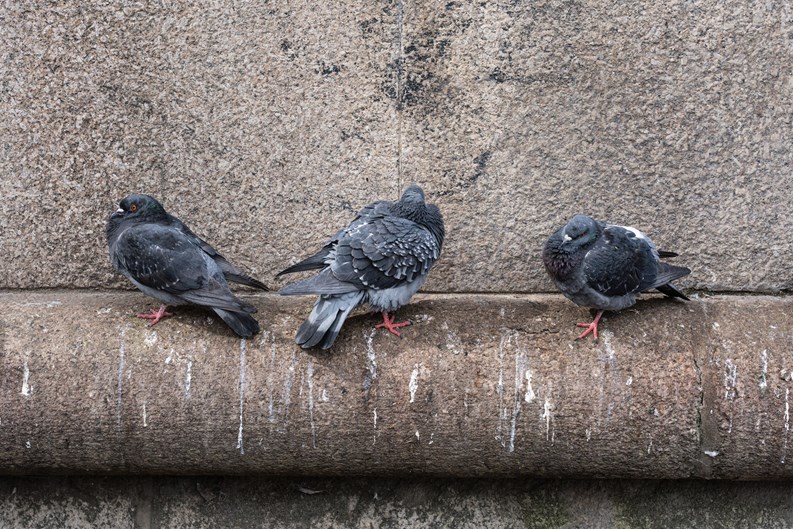
When it comes to cleaning up bird waste at your property, it’s vitally important to take precautions to protect both custodial staff and residents from exposure to the allergens, pathogens, and parasites contained in droppings, feathers, and nest debris.
According to a fact sheet published by the National Safety Council (NSC), “Proper disinfection of a site is extremely important to kill all disease agents so they no longer pose a danger. Precautions should always be taken when droppings are encountered.” The NSC also strongly cautions against using brooms, vacuums, or other agitating tools to tackle a bird mess; “Never sweep, vacuum, or disturb droppings, and if possible, avoid these areas entirely. Only wet cleaning methods are recommended when cleaning contaminated areas.” This is because the dust from dried guano is still loaded with bacteria, spores, and parasites, and when that dust is kicked up into the air—by vigorous sweeping, for example—those pathogens can easily be swallowed or inhaled, leading to an array of grisly health problems.
And the risk doesn’t stop with whomever is cleaning up; the pathogens that cause histoplasmosis, psittacosis and cryptococcosis can hitch a ride on microscopic dust particles that can linger in poorly ventilated or actively disturbed spaces for hours.
If there are a small amount of droppings in a localized area:
• Wear non-latex rubber gloves
• Mix a disinfectant solution of one part bleach to 10 parts water
• Using a spray bottle or a clean pesticide application sprayer, thoroughly soak the droppings with the disinfectant solution
• After the droppings are thoroughly wet, clean them up with a mop, sponge, or rag that also has been soaked in disinfectant solution
• Place the contaminated material in a sealed plastic bag. Place this sealed bag into a second plastic bag, seal it, and dispose of in the regular trash
• Disinfect or throw away used gloves
• Wash hands thoroughly with soap and warm water
If there’s a large amount of droppings in a large area:
• Prior to entering the contaminated area, don a NIOSH-approved respirator with HEPA filter cartridges, non-latex rubber gloves, eye protection, disposable coveralls and shoe coverings or washable clothing with rubber boots.
• Follow steps 2 through 6 above.
• Dispose of one-time use PPC and clean and disinfect the respirator and rubber boots according to established procedures.
• For very large areas with heavy droppings, contact a professional pest or animal removal company to inspect the situation, clean the property, and advise on proper cleanup control procedures going forward.





Leave a Comment