


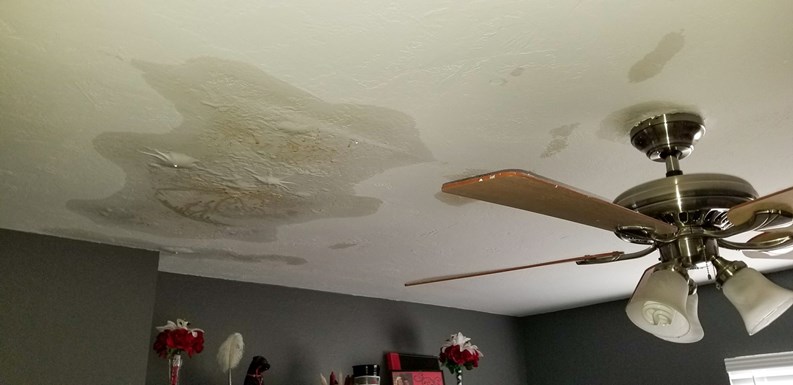
Keeping a building dry is both an interior and exterior challenge. All buildings, regardless of materials and construction, are at risk of water infiltration and moisture build-up in walls, ceilings, window wells and roof materials.
This can cause a wide range of problems, from structural deterioration that undermines the integrity of the building itself to health issues for residents who live there, says Russ Fernandes, senior VP and owner of Becht Engineering BT, Inc. based in Warren, New Jersey. “Preventing water infiltration into living spaces is vital to the protection of residents’ health and the protection of property. Water infiltration into habitable spaces can lead to the propagation of mold growth, which can include toxic molds and deterioration of building components—and long term deterioration can ultimately lead to structural damage.”
Locating and correcting leakage problems before they get to that point requires vigilance from residents, staff, and management, and a commitment by boards to act quickly and decisively when one arises.
The Origin of Leaks
Moisture shows up inside buildings in two main ways: in liquid form, known as ‘bulk water,’ or in the form of gas, called ‘vapor drive.’ Bulk water visibly flows, drips, trickles, and pools. Unless it’s the result of a burst pipe or overflowing appliance, it originates outside the building, most commonly entering through failed sealant joints, window perimeters, and roof transitions like chimney exit points, parapet walls, or where metal roofing material meets asphalt. By contrast, vapor drive originates inside the building, and is the natural movement of usually-invisible water vapor through building materials from areas of warm, humid high vapor areas to colder, drier low pressure areas. If water vapor gets trapped and accumulates inside wall or ceiling assemblies (usually because of poor ventilation and/or insulation issues) this condensation can lead to mold growth, and eventual structural damage.
Multifamily buildings are engineered to resist both bulk and vapor moisture. For bulk water, “Modern buildings often utilize drainage or rainscreen systems to control it,” says Neil Rouleau, chief operating officer of Boston-based BRS/Building Restoration Services Corp. and BRS/Building RECON Services. “These designs assume that some water will penetrate the cladding, and incorporate internal membranes and flashings to redirect that water to weep-holes for discharge. If these internal components are defective, the system fails.
“With regards to vapor drive,” Rouleau continues, “a properly placed vapor retarder is essential to prevent water vapor from hitting a dew point inside the wall where it turns into liquid and causes hidden rot.”
According to Fernandes, any structure can spring a leak, but a building’s specific vulnerabilities depend on what the building is made of, and how (or perhaps how well) it’s constructed. “There are many different building types, from wood frame townhomes or garden apartments to steel framed high rise buildings,” he says, “so any list of likely entry points will vary, based on the type of construction. That said, one common source of leaks in any style of building is the failure to properly detail the penetrations of roofs and/or walls in any style building.”
Penetrations are any spot on a roof or wall where there is an opening or gap created in the building envelope to allow services like pipes, cables, HVAC components, dryer vents, or the aforementioned chimneys to pass through from one side to the other. If these penetration points aren’t properly flashed and sealed, problems from both bulk water and vapor drive almost inevitably arise.
Giulia Alimonti, vice president of Falcon Group/Falcon Engineering, a national firm with offices in New York, Florida, New Jersey and Pennsylvania adds that “any lack of continuity in a building envelope’s transition between different materials—say windows and façade, for example—can result in a breach. You have a transition between the exterior brick and the metal window frames, so there must be a sealant in between. This critical joint must be regularly inspected and replaced,” she continues, because as the sealant wears out over time, that deterioration creates gaps between the brick and metal, which in turn allows infiltration of both air and water.
Along with roofs and windows, basements are also fertile ground for water infiltration, explains Sushruth Keval, an associate with CTL group, an Illinois based engineering firm with offices in Chicago and New York. “One of the most frequent points of possible water infiltration is…the basement or other areas below surface level. Water intrusion through the walls or basement causes interior plaster damage and creates damp conditions that favors unwanted organic growth. Over time, trapped moisture can cause severe damage to the building components, especially when it repeatedly freezes and thaws.”
The Pillars of Waterproofing
According to the pros, proper waterproofing is the foundation of a building’s longevity, and is centered on four primary pillars. “Structural preservation is the first pillar,” Rouleau explains. “Water is the most destructive element in the built environment. It causes the oxidation and corrosion of structural steel, the rot of timber framing, and the freeze-thaw spalling of masonry. The second pillar, though no less important, is the health and safety of the residents. Moisture trapped within wall assemblies or interiors fosters mold growth, and compromises indoor air quality” which in turn can cause or worsen respiratory illnesses like asthma, as well as other allergic reactions. While these issues are of concern to anyone living, working in, or visiting a given building, they’re especially dangerous for the very young, the elderly, and anyone living with compromised immunity.
“Preserving asset value is the third pillar in establishing a vigilant leak prevention/detection policy,” Rouleau continues. “Unaddressed water infiltration leads to special assessments, and deferred maintenance can cripple property values. I’ve seen condominium owners unable to sell their units because a looming capital project to address leaks creates too much financial uncertainty for buyers.
“Finally, hydrostatic pressure in basements is an added factor. Waterproofing isn’t just about keeping moisture out; it’s about resisting the physical force of groundwater pushing against the foundation, which can cause structural shifting.”
Early Warning Systems
By the time actual rivulets of water are trickling down a wall, or stains start spreading across a ceiling, the time for minor fixes is likely past. But how can you know there’s a problem before it gets to that critical point? According to Alimonti, the canary in the leaky coalmine is often drafty windows—especially in older buildings. Drafts and condensation around windows indicates that the window seals are breaking down—and if air can move through, eventually water will too, leading to all the costly headaches discussed above.
According to Keval, when evidence of a leak is visible, “Professionals usually start by gathering patterns where residents see staining or peeling, when it happens after wind-driven rain or any heavy weather event. Next comes a focused engineering inspection of likely entry points, often paired with tools like infrared scanning or electrical impedance testing to narrow down where moisture is active. Repairs then target the source by restoring waterproofing and deteriorated masonry components. Post-repair water tests are recommended to verify and confirm that the leak path has been addressed.”
“Today,” Rouleau adds, “a professional approach has moved away from ‘guess-and-check’ repairs and toward a scientific diagnostic approach, first by process of elimination. The goal is to understand why the building leaks before spending money on how to repair it. We use controlled water penetration resistance testing, applying water to specific exterior sites while monitoring the interior. Then we continue with directional testing, always from the bottom up to avoid ‘ghost leaks’ caused by overspray from above or adjacent areas.
“Next,” he continues, “we use moisture mapping, employing moisture meters to determine if materials are absorbing water even before a visible drip appears. And finally, we do a root cause analysis. Once the source is isolated, we can provide repair budgeting and options.”
New Technologies
That more scientific diagnostic approach to leak and moisture remediation often makes use of new technologies that enable engineers to pinpoint the source of a leak with near-surgical precision.
For example, infrared thermography is an imaging technology that ‘sees’ through solid materials and detects temperature anomalies without having to open up the wall or ceiling in question to hunt down where the water is coming from. Since wet insulation retains heat longer than dry materials, moisture trapped behind walls or under membranes shows up in thermal imaging, and can be mapped without invasive cutting, although often some limited sampling is needed to validate results. Thermal imaging can also help identify air leaks, as well as thermal bridging, when heat transfers across a metal stud, for example, and provides a way to find pinhole breaches in flat-roof membranes that are invisible to the eye.
Leak prevention tech also extends to construction materials themselves. For example, modern crystalline technology has enabled the development of admixtures that make concrete inherently water-resistant by plugging pores. This is particularly effective for negative-side waterproofing interior foundation walls, preventing groundwater infiltration without the massive expense of exterior excavation. Further aboveground, self-gasketing roof and wall membranes are air and water barriers that ‘self-heal’ or seal tightly around fasteners and other surface penetrations, keeping moisture out and ensuring the assembly’s integrity.
The Price of Doing Nothing
Like a broken tooth or a pest infestation, leaks don’t get better on their own; quite the opposite, in fact. Ignoring leaks can result not just safety and health issues, but financial and legal consequences as well.
“By the time a leak is visible,” says Rouleau, “the internal sheathing and structural studs have often been saturated for a long period, leading to significantly higher repair costs than if the issue were addressed early. Prolonged moisture can weaken critical connections, such as balcony railings or fire-rated assemblies, and affect the structural capacity of steel structural components.”
“The longer water is allowed to travel and spread, the more likely you’re looking at more disruption and higher costs,” says Keval. “Moisture can remain hidden behind finishes, gradually worsening conditions indoors and increasing the chance of unwanted organic growth. Over time, repeated water or moisture infiltration can accelerate cracking and deterioration, making repairs more extensive and expensive.”
And if that’s not enough to convince you of how crucial it is to address leaks swiftly and professionally, adds Rouleau, “Unresolved leaks can lead to litigation, insurance premium hikes, and a total loss of marketable title during property transfers.”
Winning the Battle
The natural forces and phenomena that lead to leaks and water damage aren’t going anywhere. Heat, cold, wind, rain, snow, sleet—the weather in general is your building’s greatest enemy, and while nobody can control the weather, a regular program of inspection, detection, and correction will help keep your building exterior intact and your building interiors dry and cozy. According to the pros, having your individual building components inspected every three to five years (unless required more frequently by law) by respected, experienced professionals and following their recommendations is reasonable.
In light of the terrible tragedy a few years ago at the Surfside Condominium in Florida, structural problems and façade impairment should not be taken lightly—and residents and boards alike should never defer crucial maintenance in favor of keeping fees and assessments artificially low. When it comes to leaks and water damage, proactive detection and swift remediation are key to maintaining both safety and value.
A.J. Sidransky is a staff writer/reporter with CooperatorNews, and a published novelist. He may be reached at alan@yrinc.com.




Leave a Comment